They’re screaming it from the rooftops: “addiction is a disease, and you can’t stop it without medical treatment”! But why are they screaming it so loud, why are they browbeating us about it, why is it always mentioned with a qualifier? You don’t hear people constantly referring to cancer as “the disease of cancer” – it’s just “cancer”, because it’s obvious that cancer is a disease, it’s been conclusively proven that the symptoms of cancer can’t be directly stopped with mere choices – therefore no qualifier is needed. On the other hand, addiction to drugs and alcohol is not obviously a disease, and to call it such we must either overlook the major gaps in the disease argument, or we must completely redefine the term “disease”.
Real Diseases versus The Disease Concept or Theory of Drug Addiction
In a true disease, some part of the body is in a state of abnormal physiological functioning, and this causes the undesirable symptoms. In the case of cancer, it would be mutated cells which we point to as evidence of a physiological abnormality, in diabetes we can point to low insulin production or cells which fail to use insulin properly as the physiological abnormality which create the harmful symptoms. If a person has either of these diseases, they cannot directly choose to stop their symptoms or directly choose to stop the abnormal physiological functioning which creates the symptoms. They can only choose to stop the physiological abnormality indirectly, by the application of medical treatment, and in the case of diabetes, dietetic measures may also indirectly halt the symptoms as well (but such measures are not a cure so much as a lifestyle adjustment necessitated by permanent physiological malfunction).
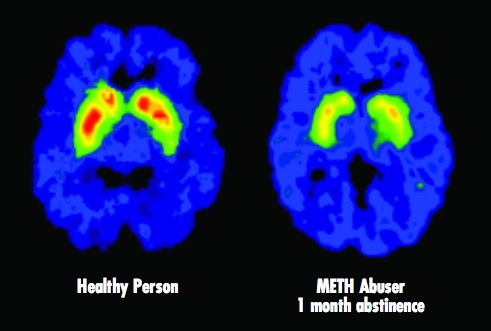
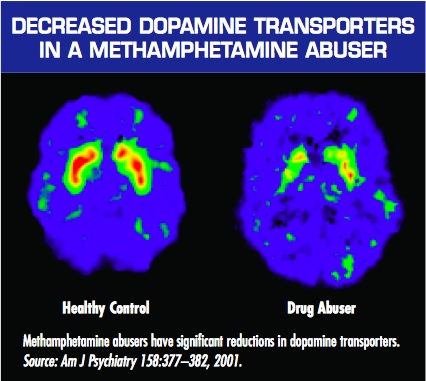
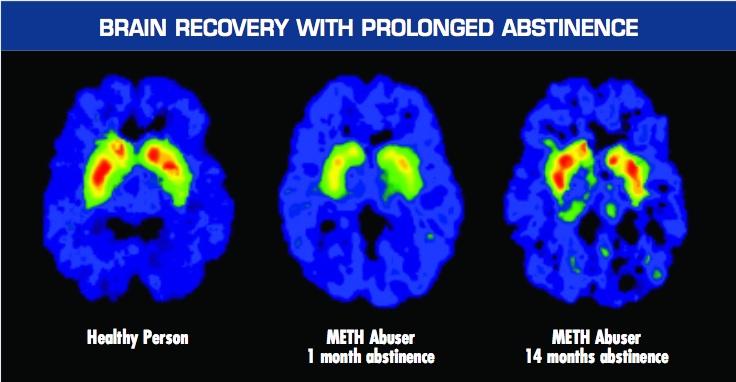
In addiction, there is no such physiological malfunction. The best physical evidence put forward by the disease proponents falls totally flat on the measure of representing a physiological malfunction. This evidence is the much touted brain scan[1]. The organization responsible for putting forth these brain scans, the National Institute on Drug Abuse and Addiction (NIDA), defines addiction in this way:
Addiction is defined as a chronic relapsing brain disease that is characterized by compulsive drug seeking and use, despite harmful consequences. It is considered a brain disease because drugs change the brain – they change it’s structure and how it works. These brain changes can be long lasting, and can lead to the harmful behaviors seen in people who abuse drugs.
They are stating outright that the reason addiction is considered a disease is because of the brain changes evidenced by the brain scans they show us, and that these changes cause the behavior known as addiction, which they characterize as “compulsive drug seeking and use”. There are two ways in which this case for the disease model falls apart:
- the changes in the brain which they show us are not abnormal at all
- there is no evidence that the behavior of addicts is compulsive (compulsive means involuntary)
This all applies equally to “alcoholism” as well. If you’re looking for information on alcoholism, the same theories and logic discussed here are applicable; wherever you see the term addiction used on this site, it includes alcoholism.
Brain Changes In Addicts Are Not Abnormal, and Do Not Prove The Brain Disease Theory
On the first count – the changes in the brain we see in the brain scans of substance abusers are not an abnormal functioning of the brain. They are quite normal, as research into neuroplasticity has shown us. Whenever we practice doing or thinking anything enough, the brain changes – different regions and neuronal pathways are grown or strengthened, and new connections are made; various areas of the brain become more or less active depending upon how much you use them, and this becomes the norm in your brain, but changes again as you adjust how much you use those brain regions depending on what you choose to think and do. This is a process which continues throughout life, there is nothing abnormal about it. But don’t take my word for it, listen to Sharon Begley, science writer for the Wall Street Journal, who has spent years investigating it and writing both newspaper columns and books on neuroplasticity[2]
The term refers to the brain’s recently discovered ability to change its structure and function, in particular by expanding or strengthening circuits that are used and by shrinking or weakening those that are rarely engaged. In its short history, the science of neuroplasticity has mostly documented brain changes that reflect physical experience and input from the outside world.
So, when the NIDA’s Nora Volkow and others show us changes in the brain of a substance user as compared to a non-substance user, this difference is not as novel as they make it out to be. They are showing us routine neuroplastic changes which every healthily functioning person’s brain goes through naturally. The phenomenon of brain changes isn’t isolated to “addicts” or anyone else with a so-called brain disease – non-addicted and non-depressed and non-[insert brain disease of the week here] people experience brain changes too. One poignant example was found in the brains of London taxi drivers, as Begley and neuroscientist Jeffrey Schwartz pointed out in The Mind and The Brain. [4]
Is Being A Good Taxi Driver A Disease?
A specific area of the brain’s hippocampus is associated with creating directional memories and a mental map of the environment. A team of researchers scanned the brains of London taxi drivers and compared their brains to non-taxi drivers. There was a very noticeable difference, not only between the drivers and non-drivers, but also between the more experienced and less experienced drivers:
There it was: the more years a man had been a taxi driver, the smaller the front of his hippocampus and the larger the posterior. “Length of time spent as a taxi driver correlated positively with volume in…the right posterior hippocampus,” found the scientists. Acquiring navigational skills causes a “redistribution of gray matter in the hippocampus” as a driver’s mental map of London grows larger and more detailed with experience.
So, the longer you drive a cab in London (that is, the longer you exert the mental and physical effort to quickly find your way around one of the world’s toughest to navigate cities), the more your brain physically changes. And the longer you use drugs, the more your brain changes. And indeed, the longer and more intensely you apply yourself to any skill, thought, or activity – the more it will change your brain, and the more visible will be the differences between your brain and that of someone who hasn’t been focused on that particular skill. So, if we follow the logic of the NIDA, then London’s taxi drivers have a disease, which we’ll call taxi-ism. But the new diseases wouldn’t stop there.
Learning to play the piano well will change your brain – and if you were to compare brain scans of a piano player to a non-piano player, you would find significant differences. Does this mean that piano playing is a disease called Pianoism? Learning a new language changes your brain, are bilingual people diseased? Athletes’ brains will change as a result of intensive practice – is playing tennis a disease? Are soccer players unable to walk into a sporting goods store without kicking every ball in sight? We could go on and on with examples, but the point is this – when you practice something, you get better at doing it, because your brain changes physiologically – and this is a normal process. If someone dedicated a large portion of their life to seeking and using drugs, and their brain didn’t change – then that would be a true abnormality. Something would be seriously wrong with their brain.
Its not just physical activity that changes our brains, thoughts alone can have a huge effect. What’s more, whether the brain changes or not, there is much research which shows that the brain is slave to the mind. As Begley points out elsewhere, thoughts alone can create the same brain activity that would come about by doing things[2]:
Using the brain scan called functional magnetic resonance imaging, the scientists pinpointed regions that were active during compassion meditation. In almost every case, the enhanced activity was greater in the monks’ brains than the novices’. Activity in the left prefrontal cortex (the seat of positive emotions such as happiness) swamped activity in the right prefrontal (site of negative emotions and anxiety), something never before seen from purely mental activity. A sprawling circuit that switches on at the sight of suffering also showed greater activity in the monks. So did regions responsible for planned movement, as if the monks’ brains were itching to go to the aid of those in distress.
So by simply practicing thinking about compassion, these monks made lasting changes in their brain activity. Purely mental activity can change the brain in physiologically significant ways. And to back up this fact, Dr Gene Heyman brings up the case of Dr Jeffrey Schwartz[3], who has taught OCD patients techniques to think their way out of obsessive thoughts. After exercising these thought practices, research showed that the brains of OCD patients looked no different than the brains of those who never had OCD. If you change your thoughts, you change your brain physically – and this is voluntary. This is outside the realm of disease, this shows a brain which changes as a matter of normality, and can change again, depending on what we practice. There is nothing abnormal about a changing brain, and the type of changes we’re discussing aren’t necessarily permanent, as they are characterized to be in the brain disease model of addiction.
These brain change don’t need to be brought on by exposure to chemicals. Thoughts alone, are enough to rewire the very circuits of the human brain responsible for reward and other positive emotions that substance use and other supposedly “addictive” behaviors (“process addictions” such as sex, gambling, and shopping, etc.) are connected with.
The Stolen Concept of Neuroplasticity in the Brain Disease Model of Addiction
Those who claim that addiction is a brain disease readily admit that the brain changes in evidence are arrived at through repeated choices to use substances and focus on using substances. In this way, they are saying the disease is a product of routine neuroplastic processes. Then they go on to claim that such brain changes either can’t be remedied, or can only be remedied by outside means (medical treatment). When we break this down and look at it step by step, we see that the brain disease model rests on an argument similar to the “stolen concept”. A stolen concept argument is one in which the argument denies a fact on which it simultaneously rests. For example, the philosophical assertion that “reality is unknowable” rests on, or presumes that the speaker could know a fact of reality, it presumes that one could know that reality is unknowable – which of course one couldn’t, if reality truly was unknowable – so the statement “reality is unknowable” invalidates itself. Likewise, the brain disease proponents are essentially saying “neuroplastic processes create a state called addiction which cannot be changed by thoughts and choices” – this however is to some degree self-invalidating, because it depends on neuroplasticity while seeking to invalidate it. If neuroplasticity is involved, and is a valid explanation for how to become addicted, then we can’t act is if the same process doesn’t exist when it’s time to focus on getting un-addicted. That is, if the brain can be changed into the addicted state by thoughts and choices, then it can be further changed or changed back by thoughts and choices. Conditions which can be remedied by freely chosen thoughts and behaviors, don’t fit into the general understanding of disease. Ultimately, if addiction is a disease, then it’s a disease so fundamentally different than any other that it should probably have a completely different name that doesn’t imply all the things contained in the term “disease” – such as the idea that the “will” of the afflicted is irrelevant to whether the condition continues.
Substance Use Is Not Compulsive, It Is A Choice
On the second count, is there any evidence that substance use is involuntary? When the case for the disease is presented, the idea that drug use is involuntary is taken for granted as true. No evidence is ever actually presented to support this premise, so there isn’t much to be knocked down here, except to make the point I made above – is a piano player fundamentally incapable of resisting playing the piano? They may love to play the piano, and want to do it often, they may even be obsessive about it, but it would be hard to say that at the site of a piano they are involuntarily driven by their brain to push aside whatever else they need to do in order to play that piano.
There is another approach to the second claim though. We can look at the people who have subjectively claimed that their substance use is involuntary, and see if the offer of incentives results in changed behavior. Heyman covered this in his latest book, Addiction: A Disorder of Choice[3]. He recounts studies in which cocaine abusers were given traditional addiction counseling, and also offered vouchers which they could trade in for modest rewards such as movie tickets or sports equipment – if they proved through urine tests that they were abstaining from drug use. In the early stages of the study, 70% of those in the voucher program remained abstinent, while only 20% stayed abstinent in the control group which didn’t receive the incentive of the vouchers. This demonstrates that substance use is not in fact compulsive or involuntary, but that it is a matter of choice, because these “addicts” when presented with a clear and immediately rewarding alternative to substance use and incentive not to use, chose it. Furthermore, follow up studies showed that this led to long term changes. A full year after the program, the voucher group had double the success rate of those who received only counseling (80% to 40%, respectively). This ties back in to our first point that what you practice, you become good at. The cocaine abusers in the voucher group practiced replacing substance use with other activities, such as using the sports equipment or movie passes they gained as a direct consequence of abstaining from drug use – thus they made it a habit to find other ways of amusing themselves, this probably led to brain changes, and the new habits became the norm.
Long story short, there is no evidence presented to prove that substance use is compulsive. The only thing ever offered is subjective reports from drug users themselves that they “can’t stop”, and proclamations from treatment professionals that the behavior is compulsive due to brain changes. But if the promise of a ticket to the movies is enough to double the success rate of conventional addiction counseling, then it’s hard to say that substance users can’t control themselves. The reality is that they can control themselves, but they just happen to see substance use as the best option for happiness available to them at the times when they’re abusing substances. When they can see other options for happiness as more attractive (i.e. as promising a greater reward than substance use), attainable to them, and as taking an amount of effort they’re willing to expend – then they will absolutely choose those option instead of substance use, and will not struggle to “stay sober”, prevent relapse, practice self-control or self-regulation, or any other colloquialism for making a different choice. They will simply choose differently.,
Two Most Relevant Reasons Addiction Is Not A Disease
So to sum up, there are at least two significant reasons why the current brain disease theory of addiction is false.
- A disease involves physiological malfunction, the “proof” of brain changes shows no malfunction of the brain. These changes are indeed a normal part of how the brain works – not only in substance use, but in anything that we practice doing or thinking intensively. Brain changes occur as a matter of everyday life; the brain can be changed by the choice to think or behave differently; and the type of changes we’re talking about are not permanent.
- Drug use in “addicts” is not compulsive. If it was truly compulsive, then offering a drug user tickets to the movies would not make a difference in whether they use or not – because this is an offer of a choice. Research shows that the offer of this choice leads to cessation of substance abuse. Furthermore, to clarify the point, if you offered a cancer patient movie tickets as a reward for ceasing to have a tumor – it would make no difference, it would not change his probability of recovery.
Addiction is NOT a disease, and it matters, as we’ll learn on the next page that this has huge implications for anyone struggling with a substance use habit.
References:
- NIDA, Drugs Brains and Behavior: The Science of Addiction, sciofaddiction.pdf
- Sharon Begley, Scans of Monks’ Brains Show Meditation Alters Structure, Functioning, Wall Street Journal, November 5, 2004; Page B1, http://psyphz.psych.wisc.edu/web/News/Meditation_Alters_Brain_WSJ_11-04.htm
- Gene Heyman, Addiction: A Disorder of Choice, Harvard University Press, 2009
- Sharon Begley and Jeffrey Schwartz, The Mind And The Brain, Harper Collins, 2002
Why Does It Matter Whether or Not Addiction Is A Brain Disease?
When we accept the unproven view that addiction and alcoholism are brain diseases, then it will lead us down a long, painful, costly, and pointless road of cycling in and out of ineffective treatment programs and 12 step meetings. You will waste a lot of time without finding a permanent solution. When we examine the evidence, throw out the false disease concepts, and think rationally about the problem we can see that addiction is really just a matter of choice. Knowing this, we can bypass the rehabs, and find the true solution within ourselves. You can choose to end your addiction. You can choose to improv your life. You can choose to stop the endless cycle of “recovery” and start living. You don’t need to be a victim of the self-fulfilling prophecy that is the brain disease model of addiction. There are alternative views and methods of change which I hope you’ll take the time to learn about on The Clean Slate Addiction Site.
How To End Addiction, Substance Dependence, Substance Abuse, Alcoholism, and General Drug and Alcohol Problems
Due to the fact that most conventional rehab and addiction treatment programs follow the false belief that addiction is a disease, they are generally not effective at dealing with these problems – so I really can’t ethically recommend any “treatment” programs other than a run of the mill detoxification procedure if you feel you may be experiencing physical withdrawal symptoms – you can find that through your local hospital, by asking your primary care doctor, or by calling 911 if you feel your life is in danger due to withdrawal (beware that withdrawal from alcohol and some prescription drugs such as the class known as benzodiazepines can lead to fatal seizures). But what comes after detoxification is simply personal choices, and treatment programs actually discourage productive personal choices by attempting to control people and feeding them nonsensical theories such as the disease theory and powerlessness.
If you want to end or alter your own substance use habits you need only to make different choices, and commit to new choices for a long enough time that they become habitual, or your new norm. How do you orient yourself towards this and get in the proper mindstate? It all starts at the level of thought. By reading and comprehending the information on this page, you have already kick-started some new thoughts about substance use. This is the beginning of change – and you can continue to change on your own as most people do, but if you feel you want more help, I do offer some highly effective Cognitive Behavioral Education solutions.
The Clean Slate Addiction Site Blog – Whether or not you employ my services, The Clean Slate Addiction Site Blog is here as a free resource for you to use. It is a valuable means to developing a rational view of addiction. I regularly write posts on drug and alcohol addiction news, government policies regarding drugs, addiction, and alcoholism. You’ll find analysis of conventional treatment methods and alternative treatment methods. There is also a wealth of research on treatment success rates, self-change, and the natural course of addiction, as well as news and reviews on new books and approaches to addiction. I hope you’ll read the blog, because some studies have found that just knowing that you can change, and knowing that addiction is not a disease or brain disease, can often be a powerful impetus to change. So much of the recovery culture message is focused on teaching people to be powerless, and see themselves as doomed to a lifelong struggle with disease, that it truly is a breath of fresh air and quite empowering to learn how to see through this nonsense and know that you are fully capable of change.

This makes perfect sense.
How can You even think about stopping your personal addiction if you believe You are “living with a disease”?
I was taught in AA that i have a disease for the rest of my life!, so I continued to drink,and drug , using my “disease” as an excuse.
Oh I might as well give up my sobriety, because ill never be disease free….
Well thats the exact opposite of what I really needed to hear.
After learning about my addiction being a “Learned behavior” ,and NOT a disease, only then was I able to understand how to control myself,and my addiction, without any excuses.
Thanks for writing this up , it makes total sense, and i hope it will help someone else out there as well.
At last,I agree,something that makes perfect sense to me,it is liberating to read
Congratulations
I am utterly committed to not using the 12 step fellowships as a tool for recovery. I am not impressed at all with the limited disease model and the limited recovery on offer in any of them. I am 25 years clean and left them all after 8 years. I had done NA, CODA and SLAA. I never believed I had a disease. I did like CODA and SLAA for shining a light on deeper emotional problems and providing some tools to enhance my self worth. At 10 years I had a complete emotional breakdown/breakthrough when my emotional history that I had buried from my childhood came flooding out like a burst dam. But not before some seriously self-destructive behaviour (although I did not drink or take drugs) had tried to protect me from all that buried pain.
I would say that my desire to truly recover precipitated this holocaust in my soul, as once my fractured self came out and grief was my only option, I very quickly unfroze and lost much of my compulsive and self destructive nature. In between these huge wells of grief and I won’t sugar coat it, they were intense and long and many years of work, I started to really feel connected to myself and happy and at peace in a way I never had before.
I just wonder where this fits in with all the cognitive models. I like cognitive therapy and there is definitely a place for it in my life, but I am also a trauma survivor and my experience of this burst dam, which was quite the surprise to me, indicates that the psyche buries much that needs to be released in the emotional sphere. I have known many people who were sexually abused, coming from abusive, loveless and neglectful family homes whose self hatred and self destructive behaviour escalates the closer they get to the place where the trauma resides.
What are your thoughts and feelings about this? I am loving all these alternatives on the net and researching everything in an attempt to figure out what I would do when faced with trying to help an addict now that I would not send them to AA, NA, SLAA,etc…
Thank you very much.
Holly
At the time Dr Benjamin Rush first proposed that alcoholism was a disease rather than a character flaw, people also believed that a slave’s desire to escape enslavement was a disease, “drapetomania”. At that time, “fever” was considered to be a single disease. At that time, doctors didn’t even wash their hands before touching patients. At that time, the idea that invisible organisms with their own interests might consider human bodies to be a source of food, shelter & reproductive resources would have seemed ridiculous.
It might have been forgivable, with the state of medical science at the time, to assume that liver failure in people known to drink copious amounts might be a disease that developed slowly over a long period of time. But we now know that it’s possible that overuse of alcohol might make the liver more susceptible to hepatitis, but that hepatitis doesn’t happen to everyone who overdrinks. We also know that people who never had a drop can catch hepatitis. It’s the infection, not the drinking – or desire to drink – that is the disease.
But, today, over a century after germ theory, disease can be defined as a physical form of dysfunction caused by:
infectious agents: bacteria, viruses, prions
poisons: mainly heavy metals like arsenic & lead
chromosome malformations, defective genes, malfunctions in epigenetic switches
organ malformation or malfunction
hormone levels over or below optimum
malnutrition, especially insufficinet nutrients like iodine or vitamins [& I mean diseases like pellagra & rickets, not feeling a bit tired & gobbling vitamins]
noninherited birth defects: low levels of poison or infections during pregnancy, malnutrition of mother, accidents during gestation, malformations of fetal organs of causes that can’t always be determined after the fact
The thing is, in all the above cases, it is possible to use physical measures to divide the population into two groups, those suffering disease X & those who don’t
And yet, even though the AMA originally panned The Big Book, doctors, especially American doctors, are heavily involved in promoting the disease concept of addiction/alcoholism. It could be that some aren’t versed enough in science to understand the weakness of the arguments in favor of alcoholism/addiction-as-disease as created/promoted by a failed stock swindler, some see the disease model as a useful way to scare people into better behavior, & some are making money running clinics that promote a theory that sets people up to be repeat customers. And, nowadays, the concept is so popular that some doctors who know full well that addiction/alcoholism is a bunch of hogwash have been intimidated by their employers to go along with the disease “theory”.
But what makes disease theory such an incredibly ridiculous proposition is that it’s now claimed that pretty much anything anyone wants to do more than once is an “addiction.” I’ve seen FBI profilers on TV saying that serial killers are addicted to killing.
Disease can refer to a condition that causes pain, dysfunction, distress, social problems, and/or death to the person afflicted. Drug or alcohol addiction can be viewed as a mental disease that was brought on by choices in the beginning, paving the way for harmful abnormal behaviors during its reign(20 weeks to 20 years), and by choices end the cycle. Overt stress can have a negative effect on our psyche. We may choose to salve our feelings in many healthy ways: exercising, reading a book, communing with nature, cooking, having a glass of wine, etc. We may also choose to salve our feelings in unhealthy damaging ways: having five glasses of wine, smoking a joint or a pack of cigarettes per day, indulging in cocaine, meth, hard liquor, heroine, etc. Addiction is a disease curable by the level of determination behind the choices to turn the downward spiral around. The physical evidence proves it’s a brain disease, the cure proves that it is not.
Alcoholics Anonymous and other such Anonymous groups do nothing but preach you were born addict and try to act like it’s a disability. When you put a chemical in your body- that’s a choice not a disability. A disability is in everyway involuntary – there’s nothing free will about it. You drink alcohol or ingest a drug in any other way- that’s a choice. Doctors will say a so called addict’s brain is different from everyone elses just so they the doctors can get money to fund such pseudoscience studies and/or collect money from insurance carriers or Medicare, or maybe it’s to hide their own abuse. Statistics prove that those who abuse alcohol or other drugs (past or present), are at their core self-centered liars. Alcohol and drug abuse is a telltale sign of that and nothing more. But thanks to groups like Alcoholics Anonymous they’ll keep on cheating, lying, stealing, and using because these groups support that kind of behavior as long as the abuser comes to their meetings. As long as they aren’t inebriated at the meetings and recite the twelve steps along with the Serenity Prayer they can still lie, cheat, and steal and remain anonymous. Don’t let these abusers be anonymous anymore. Instead expose them publicly in every way for what they truly are – self-centered liars. Do not donate time or money to any organization that supports so called addiction recovery or abusers in any way. Remember these abusers are far from powerless or helpless because they CHOOSE to lie to, cheat, and steal from anyone to continue their selfish ways.
You are very uneducated and ignorant. how pathetic and sad. Just wait until someone close to you goes through a disease like this. WOW
This guy who wrote this knows nothing about AA. I am an addict and am not a bad person. I have suffered terribly from addiction. I have always felt different, separate, and apart from the rest of humanity. I am a college graduate and achieved great successes in my life. I am now sober and it is very very hard. I thank God everyday I’m sober and hope and pray I can continue on in my journey of sobriety. This individual is very ignorant and I would love to have you walk in my shoes and deal with the thoughts I deal with on a daily basis. You wouldn’t last. So rude and disrespectful.
But I would. Be rude and disrespectful. You have a big stake in being a victim, I’M HERE TO TELL YOU THAT IT ISN’T WORTH IT. I always felt different, separate, and apart from the rest of humanity. BUT SO WHAT? You mean you’re telling me that you feel anxious? Maybe you should check into psych meds. In AA they will tell you to use your higher power. That’s why you are suffering now, because you listen to laymen at AA. Being an alky doesn’t make you an expert on addiction. They are lucky to have any valid insights into their own condition. AA will make you slip sooner or later. You’re suffering because you are listening to the wrong message. You do not have a cunning, baffling, incurable disease. I’m not blaming you for the choices you made but it is time to take responsibility. LIfe is difficult and sometimes brings pain. Just take it.
Your full of shit
Nice work Expose. In addition to all you say, there are predators and child sexual offenders mandated to these meetings. The meetings were started from a con man, narcissistic, womanizing liar and they were made for the same. Stay away people.
you think when i was a little girl i thought ” im going to be an alcoholic addict t\when i grow up” no. you have no idea what your talking about. addiction is a disease called chemical dependency. for all you people who think that alcoholics and addicts are just low life people and use it as an excuse not to quit, you better dig deeper.
Hi Lexie,
Of course I don’t think that you decided as a life goal to be an alcoholic. But I do happen to think that you’re making a choice every time you consume a drink. Drinking and drugging are purpose driven behaviors – the purpose being personal happiness (or relief from unhappiness, which is still a form of pursuing happiness). I make no judgment about drinking or drugging (or even “excessive” drinking and drugging) in and of itself as a behavior for lowlifes.
While some people may deliberately use the disease theory as an excuse when explaining their behavior to others, I’m more concerned that many more will sincerely believe and embrace the disease rhetoric, and learn to be helpless as a result – becoming a self-fulfilling prophecy, living up to the lifelong disease view (as I did, once upon a time).
The disease theory has mainly gained acceptance because it allows our loved ones to explain behavior which they otherwise cannot understand – they see what we do, and the only thing that makes sense to them is that we must be sick, insane, out of control – diseased. The truth – that from our perspective, we believe that the feeling provided by drugs and alcohol is the most happiness available to us – is too simple, too obvious, and at the same time too incomprehensible for them to even realize. Likewise, it’s apparently too simple for counselors and other so-called addiction experts to realize.
When you realize that it’s simply a choice made in the pursuit of happiness, and yet you also get a glimmer that it might not be worth the price, or that there might be greater levels of happiness available to you – then you can change the behavior. From there, it’s all about exploring your options and making bold new decisions.
Best Regards,
Steven Slate
Author, The Clean Slate Addiction Site
Addicts might have the choice to pick up their first drink or drug, or return to it, but in the cycle of using after months or years of being physically and mentally addicted, there is no choice. No matter how much you want to stop, you are going to use if you are in that cycle. Maybe you swear you will not, lock yourself in a room to abstain- but once that craving hits, you will do everything possible to get out and use regardless of your prior promises.
Other than that i agree that addiction is not a disease. I currently struggle with using after months sober.
I agree it’s very difficult to change a habit, and to see that there is a choice. I really believe I just couldn’t see my choices, or I was afraid to change. I didn’t have the courage to do something different. That’s why education about choices/habits in school is so important, and we should teach that instead of scaring kids about drugs.
It was important for me to look at why I used drugs. Why I wanted them. What was I avoiding? Every thought of drug use comes down to avoiding/escaping something, I think. But I’m no psychiatrist, just a gal who has reflected a lot on why I did it. It took me almost one year to be completely emotionally back to where I was before I started the addiction. I think it was just my brain normalizing, forming new habits, gaining more strength from my activities, getting used to facing situations without substances. What kept me going was “don’t pick up no matter what’, and “take the next indicated step”. That kept me focused on what I had to do to move forward, instead of glamorizing the past.
I’m just grateful to both of you for sharing what you have learned, and are continuing to learn about the journey. It helps us all develop in our belief that the change we hope about ourselves is not only possible, but likely. Little by little…It’s process that takes as long as it takes.
Stay forward focused, Jen. You’re getting there:0) And, Kelly…Thanks for the inspiration you give above. I shared the link to your comments above with someone I know and care about. It resonated in them deeply. Both of these comments did.
“This” is the kind of stuff that we oughta’ make sure we are all doing in forums like this. It’s such a friggin’ awesome opportunity to share information regarding substance use disorder/addiction…but, as importantly to serve hope, health and well being in a compassionate spirit of humanity. That’s ‘evolution’, baby!
To some extent, I agree with you that addictions should not be classified as a disease like cancer, meningitis or other diseases over which a person has no control. Where I disagree with you, however, is in your argument that addictions cannot be addressed through the medical model used to treat disease. Many clusters of behavioral symptoms that the medical and psychological fields classify as mental disorders vary in their cause and are usually attributed to a combination of physiological, psychological and environmental conditions. In fact, for many (or maybe most) of them, science has not been able to identify a cause. Lack of an identifiable cause for any specific disorder, however, does not prevent the disorder from responding to medical and psychological treatment. Thus, things like depression or addiction can respond to medical interventions that target symptoms both physiologically and psychologically. So, for example, the treatment for someone with an addiction might involve both medicine (although I think that’s often given to address comorbid psychiatric disorders) and therapy to help the person manage and reduce symptomatic thinking and behavior.
I disagree that classifying addiction as disease necessarily implies that the addicted person is helpless. This simply isn’t true. And it isn’t true even in some other conditions in which science has identified a physiological cause, like diabetes. The reality is that there are many diseases and disorders for which behavioral change is the key treatment (like addiction) or a major component of treatment (like diabetes or heart disease). Simply classifying a cluster of symptoms as a disease doesn’t remove responsibility for management of the disorder from the affected person. Even within the confines of medical disease (and especially chronic disease), people are required to make choices, every day, with regard to how they are going to manage their condition. For some, the only choice is whether to take their medicine. For others, it involves many more behavioral choices that determine whether their disease becomes better, gets worse, or simply remains manageable. Addictions are disorders that fall in this latter category.
Finally, I also disagree with you that 12-step programs teach helplessness. Which 12-step programs do encompass the concept of powerlessness, it does not involve an absence of choice. The third step talks specifically about making a decision to turn your life over to the care of God. The remaining steps also encompass many concepts of choice and require taking action – in making an inventory, making amends, etc.
Where you are right, is in refusing to let people with addictions get a free pass on their behavior. People with addictions have a definite choice regarding whether they will make the behavioral changes needed to manage and improve their disorders.
I do not speak from a scientific standpoint at all. I speak from experience. I am ambivalent to the idea that addiction is not a brain disease. There is one component of addiction that I want to comment on. That would be compulsive behavior. You say that compulsion is voluntary It is my experience that it is not. I was compelled, without relief or any forethought that I had a choice whether to seek out or use drugs. I could not stop. My brain was telling me not to stop until I had procurred drugs. I had to hit bottom before I found the courage to stop……I have been sober 2 years now. I still have cravings, but I know now I do have a choice. Before, I did not. And almost every addict is in the same boat.
I’m a bit confused Clayton. Do you think that at one time, you literally were incapable of choosing to stop, and that at a later time you became capable of choice?
Or – is it that you were capable of choosing differently all along, but you simply didn’t believe (or know) it before?
I did not make myself clear. I believe that I did not have a choice to stop. I think addiction is more mental then physical, although the physical need was overwhelming. It never became clear to me that I could live another way until a medical intervention from my physician and friends took place. Willpower plays a small role here, but it too cannot work if one has a malfunctioning brain. I speak for myself here……I could not stop. Period. Now, I have stopped. Not just because of the intervention, but because I have turned my life and my will over the God of my understanding. That is something 12 step programs have taught me.
Congratulations on turning things around.
I believe that you believed that. I also believe that you believed you had the right to treat yourself however you saw fit, even if that included seriously self destructive behavior. You may have believed it so strongly that no one else had the right to tell you otherwise, and you then had the right to lie, cheat, steal, conceal, whatever it took because no one could take that most basic right to destroy yourself away.
Perhaps a belief in a higher power helped you realize how not alright it was to abuse yourself. Perhaps for some it is deciding they have enough self worth that it is no longer acceptable to abuse themselves any longer. Perhaps removing that choice to choose addictive behavior is the critical difference which allowed to choose something different, and made the real change happen.
Repeatedly I hear addicts must ‘hit bottom’ and then change happens. Hitting bottom seems to mean that the addict decides the addiction is no longer acceptable. Something about the addiction hits them hard and they have to face the real consequences. They no longer believe it is OK to treat themselves, others, or whatever, with that kind of abuse. That is a choice.
I think the entier premise of ‘hitting bottom’ shows just how much of a choice and allowing themselves to abuse whatever they abuse demonstrates this completely. If that suddenly puts someone in a position to choose to not use/abuse, then it shows the choice was there all along, but they believed in their core that doing that abuse was Ok for them.
A choice.
Compulsion to use and abuse IS voluntary… it’s your “beast” that gains control of your body. It’s that voice that keeps telling you, “come on, it’s ok this time” – the beast is a heartless faithless lover that will always suck you in and do it again and again until you decide (choice) to say NO to it. and NO you won’t die>you also will not hurt anyone else physically, mentally or spiritually by using one more time. I had a real recent experience “letting down” a friend by my stinking thinking that I could have a couple of beers. WRONG. No real harm tho’, apology accepted and back on track. Thanks for listening.
Thanks for the input Karen, but I have serious problems with the diabetes comparison:
A cellular malfunction is the root problem in diabetes. The symptoms are all caused by the cellular malfunction. The behavioral changes are all about regulating the amount of sugar intake so that those cells don’t get more work than they can handle (and thus symptoms are minimized).
Substance use is a behavior. If behavioral change is the treatment – then doesn’t that mean that you just choose to stop using the substance? It’s very direct, whereas the diabetes thing is indirect, and wholly different.
You can’t choose, as a behavior, for your body to handle sugar and insulin differently. You can only choose to use medicines which make up for the deficit, or choose to regulate your sugar intake so there won’t be so much malfunction. From there, symptoms may subside as a result. The cause is cellular malfunction. But in addiction, symptom and cause are one in the same – the symptom is using to much – and if the treatment is to change your behavior, then the cause of the behavior is chosen behavior. Do you see the circle you’ve sent me in?
Now, I know you didn’t say this, but your diabetes example makes me feel the same way I do when hear people say that “abstinence is the best treatment for addiction.” Huh? How is it a treatment? If addiction is using substances, and abstinence is not using substances – how is anything being treated? How is a disease or medical treatment involved? It’s just do it, or don’t do it.
I didn’t eat lunch yet today. I guess the best “treatment” for that is to eat lunch. I’m gonna go treat myself behaviorally now.
I know that certain ethnic groups are more susceptible to diabetes and alcoholism…does it really matter if you have destroyed your pancreas and liver by overindulging in your favorite substances that are pre disposed genetically to cause poor health? I know plenty of borderline (not on insulin yet) diabetics that will eat themselves into their graves because apparently they have NO voluntary control of what they put in their mouths and swallow. RIGHT!. Does anyone see my point?
It really does not matter if you are fighting for your physical survival. Maintaining your social status and personal relationships is ENTIRELY choice. Expecting others to make excuses for your PTSD or childhood trauma (oh you have to love me no matter what – NOT) is NOT acceptable. If you are driving impaired, I have serious issues with that. Sorry, that’s my morality. If you want to be miserable and punish yourself for the rest of your life, please don’t take me out with you. I am HAPPY!
Steven and Karen-
I would like to offer the following to help explain the differences and relationships between disease, addiction, symptoms, behaviors and causes.
The nutritional and psychological literature that I have consulted seems to be pretty much in agreement that addiction is a biological state in which our body has become acclimated to, or adapts to, the presence of a noxious or toxic agent (alcohol, drugs, unhealthy food) such that the toxin no longer has the same effect; this is known as tolerance.
Addiction is not, as Steven states, “using substances”; using substances is a behavior. A symptom and a cause are also not, as Steven states “one in the same – the symptom is using to much”. Again, using too much is a behavior. The behavior is imbibing the toxic agent in quantities and frequencies sufficient to create the biological state defined above as addiction. I think it’s important to distinguish between chosen behaviors(using substances, abstinence) that we are trying to change, the biological state caused by those behaviors(addiction), and finally the chronic diseases that may result from maintaining this toxic biological state at a cellular level(liver disease, diabetes, respiratory disease, etc). I believe that making these distinctions actually supports the model that addiction is not a disease and that the root-cause of the whole thing is changeable behaviors.
While addiction has it’s own symptoms(physical dependence, tolerance, withdrawal) and can be extremely difficult to eliminate, it isn’t necessarily a disease, which also has symptoms. The word “cause” could be used in many areas. Our behaviors may cause a change in our biological state, which may then cause certain chronic diseases, which may then cause certain symptoms. We might even say then that our chosen behavior is the root-cause of our liver disease.
Finally, I would say that this same model could be applied to a disease such as type-II diabetes. Our eating habits(behaviors) may contribute to a biological state(addiction), which may lead to diabetes(disease).
I hope this is helpful and I welcome your thoughts and any feedback.
-Don
Hi Don,
I appreciate your contribution to the conversation. But I must note that tolerance and withdrawal are not the same as what is known today as addiction. Specifically, the NIDA says that they are not one in the same, and that “addiction” as they define it needn’t include tolerance or withdrawal. When addressing the difference they state that addiction, or “compulsive drug use despite harmful consequences—is characterized by an inability to stop using a drug; failure to meet work, social, or family obligations; and, sometimes (depending on the drug), tolerance and withdrawal.”
Since this has come up several times in comments, I have decided to put up a page dedicated to this issue. It doesn’t necessarily address every point of your post, but you will find it relevant. It covers some of the problems I see most often when the issue of physical dependence is raised. You can see the page here: http://www.thecleanslate.org/dont-you-know-about-physical-tolerance-and-withdrawal-aka-physical-addiction/
To your points about causes and symptoms, I maintain that in many of the definitions and diagnostic criteria they are one in the same. The use of drugs is considered both a symptom and a cause of addiction. I promise you I didn’t create this circular logic, the various organizations who claim to be the authorities on addiction came up with this. Perhaps you misunderstand me – I like to point out the absurdity of it.
Thanks,
Steven
This is an important claim:
It’s wrong. Addiction does not respond to medical interventions. I have tried to find evidence that it does, but I just can’t. Treated addicts don’t do any better than untreated addicts. Epidemiological studies have shown this to be the case again and again. Gene Heyman lays out a whole list of such studies in his book “Addiction: A Disorder Of Choice.” I list one of my favorites here: http://www.thecleanslate.org/self-change/substance-dependence-recovery-rates-with-and-without-treatment/ This is from data collected in 2002, and is a follow up to a study done from data collected in 1992 – and the results are nearly identical! The point is, that when treatment centers claim any success, they’re only taking credit for self-change which would’ve taken place anyways without treatment.
The scan of the 2 brains (http://www.thecleanslate.org/wp-content/uploads/2010/09/volkow-brain-scan-300×224.png) is actually a scan of a normal brain and a person sleeping.
NIDA falsified their research dealing with marijuana.
Thank you for this post Steven. I can see the trolls are at it again. Maybe they need something to talk about for the upcoming Christmas alchothon. Nothing new. I wonder if excessively clinging to 12 Step mythology and fellow indoctrinees is a disease too?
I found this site while doing research for an English paper. Before I started to access this kind of information, and after I had been going to 12 step meetings for 2 years, I did not really have a belief either way as to whether addiction is a brain disease or not. Never really gave it much thought, even though it is described as a disease by AA and the like. I read the text in this site pertaining to this subject, and was enlightened to say the least. I was compelled to write something about my experience in recovery. What I have expressed here is just that, my experience….nobody else. Now while medical intervention and 12 step programs don’t work for some, it has helped countless millions over the years. I am not a scientist, nor am I well versed on addiction. I am however, an addict who has had the obsession to use arrested. What has worked for me is mine, and I own that. I just wanted to share experience where I thought maybe someone would appreciate it. Chastising someone for putting themselves out there is unkind and inappropriate. As is with the name calling (trolls? really?) I stopped that behavior when I stopped using. I respect your right to express your opinion, have some respect for me as well.
Sanctimonious lately? I do find it fascinating that Steppers comment on blantly contradictory approaches to addiction as if their input hasn’t been heard 7 million times before. I respect that you had an experience in “recovery.” Some people, such as myself, who have left AA are angry. Sites like this provide many with validation who cannot find it elsewhere. And here you come along to bless the world with your “spiritual awakening” that, to put it frankly, many are sick and tired of hearing about. You don’t have a disease. You choose to believe that a supernatural entity removed your “obsession” just as you chose to retort to a post I made that didn’t care for what you had to contribute. I do think however that since you did find this site, some doubt must be lurking somewhere in your mind. Just remember: “your best thinking got you here.” Have a nice day
Not once did I say I had a disease. I did say that that was what AA suggests to its members. I am not convinced either way that addiction is a disease or not. So yes, I guess that means I have doubt. I think addiction should aptly be called a disorder, not a disease. I was not being righteous at all. I don’t think that just because I found help through 12 step programs that I am better than anyone else. But it worked for me, and that is all I really was trying to say here. I suppose that does make me a little biased, my bad.
I am not a religious person all, but finding some solace in a “supernatural entity”, as you call it, is for me, my God. I in no way believe in God as Christian religions believe. It’s just something for me to believe in, a “false God” of sorts. Look, I in no way meant to point fingers, or put myself up on a pedestal. I just know what has worked for me. That is my belief and opinion. And we all know what they say about opinions. Let’s just agree to disagree. I’m done.
Though I admire your more liberal stance as an AA member (and I am assuming you are), I loathe it at the same time. I think it’s really what pulls a lot of people in the Program, including myself. I knew a lot of people in AA like that. Traveling around to different meetings, telling jokes, going to baseball games, “fellowshiping,” etc… I was part of it too. Say one thing contrary to AA dogma and you instantly become the elephant in the room. The comportment of these “friends” changes faster than you can say the serenity prayer. I think it was this that bothered me the most. Of course, there are the obviously “crazies” in AA like the Big Book “thumpers.” But I think the real danger exists in exactly the more milder “we’ll love you until you can love yourself” cunning niceness that ever so slightly hardens at the faintest indication of dissention. It’s cruelty at its finest simply because it’s practically invisible to non-members. The loneliest feeling in the world. It’s infuriating just detecting this tone in your writing (oozing with sanctimony and Step-speak by the way).
Ryan, you sound like a jerk. I think AA has a flawed approach, but to to downplay someone’s good experience just because you had a bad one is simply being a jerk. It is okay for some people to make changes in a way that doesn’t work for you. And it is also okay to share that on a forum like this. Drug addiction is a problem whether you subscribe to the philosophy on this website or to the disease rhetoric – and people making positive changes is really what is important. If you don’t agree with AA, that is fine, and obviously many people would agree with you. But there is no common sense in being a jerk and trivializing someone else’s success, even it it came via a path you find wrong. Being a jerk doesn’t do you or your viewpoint any favors.
Joe, you’ve completely defeated your own argument by calling Ryan a jerk. His anger is as valid as your need to scold him.
Ryan,
Resentment much?
Paps
I came across this site quite by accident, while doing research on Neurological diseases. I have had several memebers of my family afflicted with Neurological diseases. Specifically Parkinson’s and Alzheimer’s. Neither of these diseases is completely understood and neither is curable. I do not believe alcohol is a disease per se. It is still a baffling and strange affliction that isdifficult to vercome. I do believe I am powerless over alcohol. I am an alcoholic and have had success in straightening my life up with AA. I am also pragmatic about the program. It is not for everyone. It is certainly not the ticket for the many 17 year old alcholics and crackheads trying to stay out of jail that the court system has dumped on AA. Likewise, there are certainly a large number of folks in AA that have problems greater than alcohol. A good number choose to use it as a substitute for professional counceling. Alcohol merely exacerbates these problems But, there are also plenty of sincere and kind people that are willing to help a newcomer. AA has helped me.
@John S.
I am glad you find AA helpful and have remained abstinent for so long. I have to pick away at a couple aspects of your post however because I think it is very crucial. You say: “there are also plenty of sincere and kind people that are willing to help a newcomer. AA has helped me.”
Your last sentence clearly states that you were helped by AA. Correct? Before it however, you say that there are people willing to help ‘newcomers’ after stating that “AA is not for everyone.” My question is, what are the criteria for determining whether a ‘newcomer’ can be ‘helped’ by AA? If not met, would you ‘help’ the ‘newcomer’ find an appropriate alternative? What if the ‘newcomer’ expresses disdain for AA? Is he in ‘denial’ or on a ‘slippery slope?’ Is he told to ‘go to different meetings,’ thus undermining his own judgement? These are very important points for me as someone who has left.
You also expressed some disdain for ’17 year old’ ‘crackheads’/'alcoholics’ and their presense in AA, which, if I remember correctly, is a violation of AA’s fifth tradition (Each group has but one primary purpose—to carry its message to the alcoholic who still suffers). It also seems like a 4th Step may be forthcoming: see Chapter 5 of ‘Alcoholics Anonymous,’ page 417 might be great supplemental material.
Another question for you personally: As a person who, I imagine, ‘helps’ people with potential ‘diseases,’ I am curious as to what your credentials would be for involving yourself with the ‘treatment’ of a ‘disease,’ if they were?
You also say that some AA members have ‘problems more than alcohol.’ Are these particular AA members drinking alcohol as they attend AA meetings, so that it could be postulated that they may have other problems as well?
I think questions like these are very, very important. A lot of blanket, unclear statements, I find, are made in the promotion of AA. Hope I didn’t pick away at your comment too much.
Let me sum up what John said for you:
- AA isn’t for everyone.
- Alcohol addiction is a conundrum, but is different than other traditional diseases
- Alcohol addiction is difficult to overcome
- John bought into the idea that he is powerless over it
- AA may not be the right program for multiple issues beyond alcohol abuse, though it can clearly help some people (including himself)
- AA should not be used as a substitute for professional counseling, as there might be deeper issues that alcohol only magnifies
- People in AA are not villains – just because they subscribe to a questionable method of treatment does not make them evildoers. There are good people who put in the time to help those with addiction. Qualified or not, volunteers and “recovering” alcoholics are probably just trying to help.
My own point might be – clearly AA was not the right thing for you, and I agree that it is not the “right thing” in general. But it has/does help some people make better CHOICES, even if it is through that poor method. For those people, it has done good. Maybe they are brainwashed. But it is not your job to try to trump their happiness with your own feelings of contempt for AA.
Hope this helps clear things up.
It is challenging not to dip into passive-agression when responding to AA members. It is doubtful a comment here would change the beliefs of one. Critisicim of AA is very tricky to engage in. Your accusation of me ‘being a jerk’ and not a simple acknowledgement of ‘behaving passive-agressively’ is, in itself, quite irritiating. Whether AA ‘helps’ someone is not my concern. I expressed frustration with ‘blanket, unclear’ statements being made in its promotion that I believe are harmfully misleading.
One of your responses, for instance, I take issue with: ‘Alcohol addiction is a conundrum, but is different than other traditional diseases.’ I don’t believe it was deliberately calculated this way, but you first (perhaps having noticed that I don’t believe in the ‘disease’ concept) equate ‘alcohol addiction’ with being a ‘conundrum’ (a relationship I might find more palatable) then, at the end of your sentence, you re-introduce, now a bit buffered, the conept that ‘addiction’ IS a ‘disease,’ before generalizing and softening the equation by making reference to ‘other traditional diseases.’
I think this maneuver is, though not deliberately, unnecessarily mendacious and indicative of ‘disease’ proponents’ awareness that no one is REALLY going to believe that ‘addiction’ is a ‘disease,’ so it is tempting to obscure their contention in hopes that it will be accepted, at last.
As far as sites that promote AA doctrine, there are millions and millions. A comment on one of the far fewer quantity of more critical sites is doubtless going to deter any attendees from attending to make ‘good choices.’ Moreover, I have never, nor ever will, visit an AA sympathetic site to introduce ‘my views.’
I am all too pessimistically aware that AA ideology is truly beyond criticism and I think that is sad.
One last thing: your contention that ‘alcohol addiction is difficult to overcome’ is, in my opinion, a belief that ought to be challenged, as the moderater of this site has, I believe, quite admirably done. I can imagine people who are drinking ‘alcoholically’ already have that belief ingrained in them to varying degrees. I don’t think further proselytation of it is helpful to such people in the long run.
One last thing Joe, after having reviewed some of your other comments. You say, ‘i hate junkies and i hate how they are carefully babied and enabled by people with no balls,’ and recieved no response or charge of ‘being a jerk.’ While I do not wish to finger-point, I find it quite fascinating the double-standards that pervade addiction debates, mostly leaving criticism of ‘treatment’ virtually impossible (with ad hominem attacks), and far more vulgar admonishments of ‘addicts’ as seemingly welcomed and permissible.
Obviously responses and forums like this allow feathers to be ruffled, but I appreciate interesting dialogue. And I can admit my too-quick reaction in saying “jerk” – I honestly do apoligize. (The veil of the internet can cloud my judgement to be insulting.) My point is simply that helping people make better choices, overcome an addiction, be productive members of society, etc. etc. (however you define it) should be the end goal. Changing the worldview on addiction can and should be a part of that, but not the only consideration. If someone actually did have success with AA, and found it beneficial, it is their right to feel that way, to be proud of overcoming an obstacle. The way I view an AA success story is not that a person is in remission/recovery from a disease, but that AA did likely influence that person to make different choices – which is not all bad. Even if their philosophy is flawed, this is a success (to that person). And if that person lives in fear of that “one drink that could send them spiraling,” then that fear is continuing to simply affect their choices, and the stance of this website is still intact as to why that person has changed. (Even if that person thinks they are powerless, you and I and others know differently.)
You and I seem to agree that this site’s message is generally correct, and that the “disease” idea is incorrect. I was paraphrasing John by calling it a conundrum – but if it was so simple, there wouldn’t be this site and countless others with varying ideas on how to find soultions to what is clearly a problem for many people. The topic is confusing, and though the answer may seem incredibly simple (choose different), it is difficult for many to not only accept, but to put into action that answer. Further, I was again paraphrasing for John by saying that “alcoholism is difficult to overcome.” Keep in mind, that whole post was in response to yours claiming that his statements were unclear. (And, if I misinterpereted John, I apologize – though he seemed clear enough to me for a web blog reply.) But how can you say it is not difficult to overcome? That, I am unclear on. If the belief is that it is all choice as this site suggests, then it is alarming to think that you, the site moderator, or anyone else believes that some choices are not more difficult than others. Addiction may not be a disease, but habits and lifestyles are simply that – habits and lifestyles. Lifestyle change is difficult, be it someone trying to diet, drink less, study more, take care of a baby, balance a busy work schedule, etc. Just because you make the “right” decision to do something (ie: stop drinking excessively) doesn’t mean that it is easy. To convince someone that making huge changes in their lifestyle choices is easy would be doing them a disservice.
Looking at your other post, that may have been another “Joe.” I just found this site yesterday, and never posted about hating junkies, etc. So, please strike that from the record!
Very good Joe, and I certainly can agree with you that forums like this allow feathers to be ruffled. I will not delve into my personal reasons for having so much contempt for AA, but will try to answer some of your questions:
‘But how can you say it [addiction] is not difficult to overcome?’
‘To convince someone that making huge changes in their lifestyle choices is easy would be doing them a disservice.’
I base my opinion on my conviction that alcohol and other chemicals contain no inherent ‘addictive’ properties and that it is mostly the belief that they do that can make the process excruciatingly difficult. Also, I have a bias towards Stanton Peele, and his general approach that addiction (to whatever) serves a very important part of an ‘addict’s’ life and is, in many ways, a function of mostly psychological and environmental factors. He has, for instance, brought attention to the fact that many US soldiers used heroin ‘addictively’ in Vietnam, for instance, but not upon return to the US. Sure not using heroin might have been a healthier and more moral lifestyle for them at the time, but ignoring the atrocious environment and its devastating psychological imprint and encouraging or coercing abstinence, would, in my mind, have been doing them a disservice. I find the general practice of disregarding these and less extreme factors, and mandating or pursuading permanent abstinence to be too reductionistic and due mainly to the predominant temperate and stringently moral climate of this country that has, perhaps, paradoxically led to higher addiction rates.
I have my own ideas about why addiction is so prevelant today and especially in this country, and so perhaps differ in some of my views. However, I do sense you have quite a bit more empathy for such individuals and insight into the phenomenon than the other Joe, for instance (my apologies), and so appreciate your consideration of my comments.
Ryan – At some point individual opinions prevail, and for all I know mine are hogwash. I cannot say that I have personally had a substance abuse or otherwise addiction problem. I have never been to AA. And, to that end, I credit my choices and actions for avoiding such things. I however and very interested in this topic. I have family members who have abused both drugs and calories, detrimental to their lives in various ways. I have been to fundraising events that openly use the words “disease” and “predisposed,” which simply rubbed me the wrong way. I have a level of empathy because some people are not educated enough to make better choices. Or, they make one bad choice and quickly fall into a negative pattern because they lack the will or succumb to external pressures (still, through their own choices). I feel sorry for them, and agree that if they “feel powerless,” their chances of making changes do not increase. I also have a level of disdain because, doesn’t everyone know “drugs are bad”? (Obesity is bad, too much alcohol is bad, etc.) So, part of me resents them for wasting the life they have as well as money, resources, charitable programs, etc. In short, my opinion wavers.
But no matter my level of empathy, I am a firm believer that will power can conquer it all, but I guess I just have a hard time believing that it is easy. Whether it is a choice, a chemical addiction, a lifestyle, a means to escape, or anything else, people sure seem to struggle with it. Maybe they struggle because society and the “disease rhetoric” tell them to struggle. Nonetheless, it seems that for many it is easier to continue using, and more difficult to stop. Whatever that reason for being more difficult, to me it stands to reason that it is in fact difficult.
Understood and well said. For myself, having drank heavily in college and experimented with drugs, catupulted into the ‘treatment’ culture (family coercion) and then getting demonstrably worse, was a horrible experience. It was like I never got to learn that drinking excessively doesn’t make me all that happy anyways and I won’t do it anymore. Instead it was psychiatriy, 12 Step Groups, a life-long battle, yadayadayada. All of which, I have had to ‘deprogram’ myself from and reconsider now. Hence all the independent research I have been doing (including this site). Since leaving, I’ve gotten a lot less judgemental on people who use drugs, behave irresponsibly, immorally, etc… I have come to understand that there are probably reasons for such self-destructive behavior that I am not the one to deduce or comment on (no more than Bill Wilson). For that reason Harm Reduction seems like the most ethical approach, but if anyone, like me, was interested in abstinece alternatives to AA, I would point them to this site or the works of Stanton Peele.
I will mention I was stuck for awhile in AA because I always felt the compulsive need to ‘help’ such people. Now that I understand that a lot of it is strong, culturally re-inforced beliefs and emotional difficulties beyond my control, I no longer feel that compulsion. The only thing I am vocal about (if only on forums, and then again only occasionally) are the publically hidden inadequacies and indecencies that I have witnessed occur in AA, behind all the ‘serenity’ talk. While, of course, I have met many pleasant people in AA, it wasn’t them that was driving me nuts, but the inextricable aspects of powerlessness, self-condemnation, and deceptive religiosity that drove me to leave, which, unfortunately cannot be divorced from the organization, despite any presense of ‘kind’ or ‘caring’ people. Moreover, I have witnessed too many people collect Time and grow even more insufferable to be around, into ‘spiritual’ parrots, or into ticking time bombs. I’ve seen more than a couple smart, creative, empathetic individuals lose those very precious qualities in ‘service to the Program.’
Thanks for this excellent site. Some years ago I was scared straight after waking up in ER strapped to a gurney convinced I had been kidnapped by a religious cult. I even asked the doctor to call the police so I could affirm otherwise, elliciting chuckles all around. I topped the leader board that morning, attaining a .35. So horrific (and expensive) was it that I had no problem fooling around with choice or not: My life at that time had been plainly revealed. I had got myself knee deep in hell and was not going that way again. I still smoked my pack a day, however, and had no thought about quitting. Until a friend of mine contracted viral pneumonia and spent a week in hospital. “I haven’t smoked in a week and I don’t even miss it.” I was happy for him. I thought this was the start of something new for him, and I considered my own situation in that light. But–only a few days back home, breathing from an oxygen bottle, reporting weekly to a lung specialist to whom he lied about quitting–he was back again on the usual smokes. That did something to me. A window opened and I stepped through it. I let go of the smokes. There might have been a couple days of discomfort, don’t remember for sure; but whatever discomfort may have been was not enough to drive me back into the fold. I reiterate: I just let them go.
Suffice it to say, I am again back in the fold. With yet significant behavioural and salutory differences. Not all has been lost from that morning in ER. One thing for sure: I keep it at home. (My buddy, Kerouac: “Try never get drunk outside your own house.”)
The point I’m trying to make is: it is not the substance used. It is the person using it.
We addicts are not just zombies. We are human beings. Just like the restive you.
I had an interesting conversation with a friend who has struggled with a food addiction. She weighed 250 lbs. She lost 80 lbs. She said addiction is not a choice. It is a disease. She said she has to really watch her sugar intake or it sets off uncontrollable cravings. She says she is in recovery now so her weight is normal. I ave watched a close relative struggle with this same sugar issue over many years. He has to work out relentlessly and is on an Atkins diet to stay fit. Whenever he ingests any sugar (which is even in bread), he just gets these extreme cravings that he says he cannot control, and every few months he will go on a binge, until he again decides to go back on the diet. Without that diet he would be a blimp. I have seen it. Is there any evidence to show these people have just not realized their power of choosing healthier habits/values instead?
Uh…. clinical studies have proven addiction to be a disease, the brain functions differently. It’s a disposition. As a recovering addict, who has been one year clean after ten years of abuse, I believe that in order to get clean, you have to treat the disease as a disease. Anyone who believes it’s a choice will eventually make the wrong decision. I’m insulted by this article. If addiction is a choice, then so is being gay or falling out of love with someone. Good luck with anyone who fails to admit powerlessness because if you can’t do that, there’s no way in hell you can get past the first step of recovery. If you think you can beat it and fail to respect how tricky the sickness is, then you’re bound to relapse.
To my knowledge, no research has ever proven addiction to be a disease. If you would read Steven’s article a little more carefully you might better understand what he’s so well explained (not only here, but all throughout this site) – - that there is nothing abnormal about the biological adaptation of the brain to drug use; it’s nothing more than the brain’s process of learning. The presence of a neurobiological correlate to a particular behavior does not mean one is powerless to control that behavior – unless you believe that free will is an illusion and humans are essentially robots, predestined to act out the dictates of their brain’s wayward neurochemistry. There is nothing abnormal about the pathology underlying “addiction” – the process is conceptually identical to any other form of learning.
To classify problematic drug use as an illness is to disregard the major distinction between drug-associated biological changes and the deliberate act of seeking, obtaining, and using substances. If I may quote Jeffrey Schaler – “drinking is a behavior, while cirrhosis of the liver is a disease; smoking is a behavior, while lung cancer is a disease. Drinking is not cirrhosis and smoking is not lung cancer”
When people reprogram themselves to understand that drug or alcohol use is a choice, they’ll become empowered to make their own decisions, rather than living down to the expectations of the recovery culture. Admitting powerlessness, and passively surrendering one’s will to an external source to fix one’s life, it all leads nowhere.
This is spot-on Derek, and you’ve said it far more succinctly then I ever have.
I thought addiction is always a choice, until I spent a couple hours this weekend with a friend who was an overeater for decades. She said it is harmful for me to tell people addiction is a choice, not a disease because it could make someone relapse. She does not go to meetings anymore, but she says she has, after 20 years, only now reached a point where she can eat a candy bar and be satisfied. She used to steal food and eat out of trash cans, hide food, etc. So my question is: To what then do you attribute the cravings that some get to alcohol or sugar, once they start eating, these uncontrollable cravings that don’t go away even after years,and that remain a lifetime struggle. Thoughts?
I think claiming to have an “addiction” to food is a totally different thing – mostly because a person can’t decide to not eat food any more.
But if we’re talking about people engaging in behaviors that they claim are not a choice, I have to ask – if someone has no control over their use of, say, an illegal drug, why do they do their using in secret – why does their “out of control” behavior not include, say, sparking up a joint at their desk in view of the boss? Obviously, they know there would be negative repercussions. So if they can control behavior enough to try to not get fired or arrested, they can control over their behavior.
As for this person who used to eat out of garbage cans and can now eat a single candy bar & feel satisfied – how could that be possible if that person has no choice in behavior? How did the ability to control the behavior in question come about if being more in control isn’t possible?
As for sugar, all primates find sugars very attractive. We are hard-wired to prefer foods that are concentrated forms of energy, so sugar, fats, honey, fruit are more attractive than lettuce leaves or celery or tubers that require a series of steps to process out dangerous compounds. Since in the wild food is not always reliable, creatures that could quickly identify and strongly prefer concentrated sources of energy would have an advantage that would be passed to the next generation.
I also don’t understand why, if a person who believes that s/he has an addiction and that this belief helps him/her to have enough self-control to not engage in behaviors that s/he doesn’t want to do, hearing someone saying, “I disagree” would be enough to make this person chuck a belief & behavior that works for him/her & go on a bender.
All good points, thank you for your response. For some, disease theory is easier to live with than taking responsibility, which is probably why she felt so defensive.
I still struggle to understand whether these people who cannot refrain from eating the entire gallon of ice cream are really overtaken by extremely strong cravings, or if they ate that first bowl of ice cream with the expectation that it would be okay to finish the entire gallon. But then again, who am I to judge what they are experiencing and if they want to label themselves as different from other people?
Are you saying you were born an addict? Born addicted? I don’t think you were. If it weren’t a choice, then NO ONE would EVER be able to get CLEAN. You would ALWAYS use. If you were once addicted, and now you are sober, what made your disease ‘go away’? It just vanished? Into thin air? No…you stopped using. You made a choice to stop. We are not talking about tourette’s syndrome here…swallowing a pill or booze is not involuntary. It may be harder for some people to muster up the will power, and I think the more you use the harder it is, but it is not impossible. Don’t let these 12 step programs tell you that you’re an addict for life. It’s BS. You’re an addict when you’re an addict. When you’re clean, you used to be an addict. Don’t buy into the crutch and get labeled and set up to fail again and again. It started with one pill. One drink. Somewhere between THERE and ADDICTION you made millions of choices. You are not robots. You’re people. Use your beautiful minds and make good choices to be beautiful people. I think it’s incredibly awesome that anyone who was once addicted is now sober. INCREDIBLY AWESOME. I can’t say enough how incredibly awesome it is….Now go and be even more awesome by refusing to wear an ‘addicted for life’ label and refusing to be labeled ‘diseased’. Go on…do it…you know you want too
Peace and love…
Jerri, that is awesome!
Amen, i particularly enjoyed the Tourettes reference as I have Tourettes, and what i find irony in is the fact that i can control my tourettes 90% and it is a REAL neurological disorder I don’t choose to “tic” but i can choose not to, it has taken years and a lot of will power but i can control and overcome it for the most part.
That being said it infuriates me when addicts claim they have a disease that they have no control over while i genuinely “suffer” from something that truly is involuntary, if i can overcome my tourettes they sure as hell can choose to NOT pour a drink or eat a pill.
Be strong people, most everything in life is a CHOICE, happiness is a choice as well, and i believe most “addiction” stems from not choosing to be happy.
If you do not choose to be happy with what you have right now, you will never be happy in the future.
There is more to life than drugs, and you TRULY CAN Experience a greater happiness and high than drugs provide, you just cannot be too afraid to be willing to try and experience it!
“Those who decide they need help to stop smoking tend to lack self-efficacy”, so their results are not indicative of all who quit smoking. 2/3 – 3/4 of smokers quit on their own! LOVE IT!
http://www.cnn.com/2012/07/11/health/diet-fitness/quitting-smoking-weight-gain/index.html?hpt=hp_bn12
“The data in the study include only those smokers who volunteered for clinical trials and attended smoking-cessation clinics, a “self-selecting minority of smokers who may differ in important respects from those who quit without professional assistance,” the authors write.
Those who decide they need help to stop smoking tend to lack self-efficacy. They might have similar problems with the dietary and physical activity behaviors important in weight control. So these results may not be generalizable to all smokers who quit because two-thirds to three-quarters of ex-smokers stop smoking without professional help or interventions.”
If AA and NA really worked, people would heal and 1. never have to go again, and 2. be able to drink normally.
If you are AFRAID of alcohol, if you think that having one drink will either bring you back to drugs or into a spiral of drunkenness, then you have not moved on from your addiction issues, you are stuck. A program that works will include teaching people to drink normally again. It’s fine if someone LIKES to be a teetotaler, but it’s not fine if they do it out of FEAR.
Just my 2 cents.
Steven, I listened to that radio interview and I like what you said to the interviewer about your early rehab experience, when asked why you took the drugs. You said you liked it, and the counselor ridiculed you. When I stopped using drugs, and my husband and counselor asked why I did it, the same thing happened to me. They wouldn’t believe me when I said I liked it. So I had to keep searching about why I did it. Did you have to search about why you did it? Did you think that was necessary for you?
I lost my understanding of why I was using drugs for a few years. I began to believe the hype – that substance use, for an “addict” like me, is completely divorced from any sense of purpose, that it’s a mystery, that it’s driven by an elusive disease. As long as I “didn’t know why” I was doing it, my problems became worse. An integral part of change, for me, was getting back to basics, and knowing that I was using simply for the pleasure (and I also needed to make sure to disconnect the usage from any other “underlying issues” – more on that in another post, at another time).
I have a request for an article called “Why choose addiction”, or “why do they do it?”. I watched “30 on 30: Unguarded”, a documentary about basketball star Chris Herren and his oxy and heroin addiction. It is very good and brought tears to my eyes in places. The movie intersperses his story telling in front of groups of people with footage from his career and home videos. His addiction got even worse after he married (around age 20 I think), and had several children.
Steven, you often write addicts will stop when they find more meaningful activities, like work, family, etc. . But there is more to it! There are people who choose addiction when they do have a meaningful life already! Like Chris Herren, I had meaningful work and that same perfect family. He had home movie going on outings with the kids while high, I did that too. He had a double life, I had that too. He was good looking, athletic, I had that too. However, I didn’t go into those dark places of deep addiction after I had my kids. My husband watched the movie and he says I wasn’t that much different from Chris, that i’s just a matter of degree.
So watch the movie and think about it – the question really is, why does someone choose addiction? I’ve come to believe it’s a lack of knowledge of where it can lead. What are some thoughts on this?
This is good from the Time magazine article
“Surprisingly little research is conducted on the positive effects sought by drug users and what they actually achieve via their drug consumption; the assumption is that alcohol and other drugs are always bad and their users are irrational.”
Read more: http://healthland.time.com/2012/08/20/why-college-binge-drinkers-are-happier-have-high-status/#ixzz24JLNzaSH
I get to think about what I achieved with my drug consumption, and I get to put away the assumption drugs were bad and I was irrational. Wow, a great light went on. It’s true that I did exactly what I wanted and I only beat myself up over “why I did it” because I feel guilty about my husband and kids. For myself, I have no guilt at all, because I did not cause any damage, and the financial stuff I don’t mind because I wanted to do it and I can easily pay if off by working today. What a freedom this gives me.
Interesting that the writer complains about people not seeing that addiction is a disease, but the writer FAILED to state that sex addicts and likely other addicts also have the addicts disease!! Talk about unfair!
Wow. What a useful post and comments. I’m torn both as a addict and as a person seeking truth whether from a scientific view or spiritual view. What I do know is in the beginning for me I was “unbalanced” and CHOSE to self medicate. It was a CHOICE not a disease 100%. However, what I know now, is physically I can’t stop. There is NO CHOICE. If I stop I could hurt myself. Sure feels like a disease. We can all chime in with our smart debates but the fact of the matter is I’m a decent person who loves my children and can’t seem to find the way to FIX my life. I can’t WILL my way to getting over a cold nor can I WILL my way to quitting drugs. I could at the beginning had I “looked into my future” but I can’t NOW. So I’ll say it again it sure feels like a DISEASE but it also gets old feeling WRONG all the time. Whether it is or not only the atoms know for sure, right?
“Whether you think you can or you can’t, you’re right.” – Henry Ford
This pretty well sums up why feeling “powerless” is counterproductive. Apply this saying to your drug habit, and you might see that will power and choice are strong enough forces to do many things.
I have been to rehab and can tell youthe disease concept is complete crap. “They”-that is, usually councelors that have not one iota of what it is like to live with an addiction- brainwash you into beleiving this concept. Usually with a VERY high relapse rate. However, while I can tell you first hand that I believe most rehabs are just another business to prey on those who may be able to be swayed to follow the disease concept I truly do believe that it IS a genuiine mental illness and therefore we with this diisorder are ijdeed sick and can benefit from somw sort of therapy whether it be aa/na, spirituality, conventional therapy etc. But a disease? Sorry. No bueno. That is an excuse. I am a good person who has made bad choices. I now choose my family and Jesus Christ over alcohol and pills and as long as I put them first, I will be alright.
Mental illness is a disease. A disease of the brain. Just sayin.
Thanks,
I needed to read this today after a tedious and annoying day at the office, being disrespected by a single minded society follower of the disease model. Of course I was told I was the outsider after giving a referral for a non-12 step program, which ultimately helps the individual learn skills, make goals, and achieve accomplishments through changing and implementing new activities. So sorry for wanting to empower an individual! Naughty me! But yey to the pharmaceutical companies who will have another person groomed for a life of addiction in and out of treatment due to relapse (which is part of recovery remember!) – I’m being passive aggressive if you didn’t notice. Oh and the money they get for all those medications that they will end up getting. Whatever happened to ‘get your shit together’ and to taking responsibility for actions. Is smoking cigarettes a disease? No, but it causes diseases, so stop or get lung cancer, your choice. Alright, how about this then…do we send cancer suffers to jail? Oh, well if drug addiction is a disease, why do they all go to jail? Erm…okay, so what about personality disorders. I have been told in treatment clinics that a person should not only have a personality diagnosis because ‘there is no cure’ and that ‘they cannot bill for that diagnosis alone’. However, personality disordered people have significant differences in their brains…so why don’t they have direct treatment ‘cures’–because they are just like addiction–they can be changed with re-wiring like CBT, DBT and can change through personal improvements and hard work, (most cases I imagine). Oh malarky, what a mess this society is in. Bottom line, it’s all about money…if someone has a ‘disease’ they are in treatment, they ‘relapse’ because it’s ‘part of recovery’ and then the pharmaceutical and insurance companies get money up the yinyang for ever. Suprise suprise. And the longer we sit arguing about whether addiction is a disease or not, the longer they get to scoop up peoples lives and money. We all know addiction is not a disease, you are not a disease, you have choices and you can take responsibility for your actions. Yes, it might be hard, you need to re-wire your brain to feel happy about things that might just not feel so good at first, but it takes time and self-empowerment. I know it’s possible – I’ve done it myself.
Im so sick of hearing addiction is a disease. No its a choice, you did it to yourself. All it is is a cop out, a way to pass the blame and not take responsibility. Its pathetic. I used to be addicted to several things for years. I had the willpower to quit myself, so if I can just choose to quit, how is it a disease? People with real diseases can’t just decide to “cure” themselves. even brain diseases, people can’t cure themselves. When people claim addiction as a disease, it slaps people with a real disease in the face. Its a selfish move, and sickens me. Grow up, take some fucking responsibility, and face it. dont act like a little kid and pass the buck.
i too believe addiction is not a disease and I stay away from “voodoo” 12-step cults. I will go so far as to say addiciton is a habit formed as a maladaptive coping-skill. I see addiction as always coming from one or more underlying causes (it is not primary as disease-concept theorists like to say). Read “The Alcoholism and Addiction Cure” by Chris and Pax Prentiss from Passages Malibu.
Passages is very expensive. You can get the same stuff by reading The Forgotten Five Steps and working with a counselor in a few sessions. Underlying issues like depression, anxiety would require other work, I am not sure of what is involved. Or read the stuff on this site. Steven recommends St. Jude’s. How much does that cost? My friend needs rehab, and his family can afford the $18k for one month but don’t want to spend it so he’s going outpatient. I don’t see why changing a habit should cost tens of thousands of dollars. That’s just a scam.
Yes, very expensive (I know a couple of people who went there). I didn’t mean go to Passages, just get the book. On Amazon, it is less than $11 for the paperback. The book explains the philosophy used at passages so that you can apply the same principles to yourself.
I am also a strong believer that addiction is not a disease. I grew up with a mother who was a severe alcoholic, currently have a sister who is a prescription medication addict, and another sister who is a heroin addict. I deal with this on a daily basis. I know for a fact that it is their CHOICE. I know this because there was a time in my life where I was also addicted to prescription pain pills for a number of years. And geuss what? When things started to fall apart, and I noticed that everything around me was becoming shit because of my addiction, I chose to stop on my own. I decided I didn’t want this to be my life, locked myself in my apartment, quit my job, and detoxed myself. It sucked and it was hard, but I made a choice and made it happen. The same way I made the choice to start taking polls in the first place. I havent been addicted to pills in 8 years and have no desire to ever be again. Since getting clean, I have had surgerys which required me to tale pain medications afterwards, and I chose to take them as prescribed, and stopped taking them when the script ran out. Addiction is a choice, and I truely believe with all of my heart that these doctors and scientists telling people they have a “disease” is only fueling their addiction more, and giving them an excuse to continue.
I guess Alzheimer’s and dementia aren’t diseases either. Darn old people! Why don’t you play some crossword puzzles and keep your brain in shape so I don’t have to remind you to when to eat and bathe. This article does nothing to convince me of their argument, actually it seems to confirm it more than anything. Fact is, if addiction wasn’t labeled a disease then the help and treatment that’s available now wouldn’t be available. We’d all be hopeless on the street stealing and prostituting ourselves because society has given up on us. We’re good people who get caught up on bad situations. Hopelessness is rampant in the addicted mind. Shame and guilt only help to perpetuate these negative behaviors. Most addicts blame themselves plenty for all their poor choices. Compassion can go a long way.
I guess meditation must be a disease too. There are a lot of peer-reviewed studies showing that changes in the brain occur from meditation practice. Yeah, right. Folks, it’s called “brain plasticity” and that term refers to brain changes resulting from expeirence. The brain changes from just about every experience, whether it be meditation, taxi driving, falling love, addiction, etc. Addiction is an experience which in turn causes changes in the brain.
Obviously, the brain changes as a RESULT of an activity, so Nora Volkow confuses the issue by claiming brain changes from drug use are a disease.
However, many disease proponents point to a genetic predisposition to addiction, but curiously only to alcoholism. While it is possible that some races, like Chinese or American Indians, have difficulty metabolizing alcohol, that still doesn’t mean they have to do it, so it doesn’t prove that wanting to get f*cked up is a disease.
It seems more likely that this supposed alcoholic disease pattern seen in some families is in fact a learned behavior, just like poverty, lack of education, child abuse, etc. Kids learn from their parents how to drink, and those who don’t think for themselves can just repeat their parent’s mistakes.
Thanks Kelly. I know there are some studies that show a genetic predisposition to alcoholism (and possilbly drugs and process addictions too). But predispositions are not destiny; there ultimately is a choice involved.
I know you understand this Kelly, but I just wanted to follow up for other readers.
I am a recovering addict who has been clean for over 3 years. I had to have help to get that way. While I am no expert, and don’t subscribe to either side of the theory that addiction is a choice or not, do think this: It is known that chemical changes take place in the brain with addiction. When that chemical change has taken hold, why can’t that chemical change somehow take away one’s ability to make a choice? I mean, there has been a profound chemical imbalance that affects one’s behavior. I’m just asking. Thanks.
Exactly!
Clay, I understand where you are coming from. I went to a rahab to break my dependence on alcohol. However, the ultimate choice and decision to go to rehab was mine and indicitive of my decision (choice) to stop what I was doing. I see the rehab more as a timeout to break the cycle I was in, not that they “cured” me. It was all my doing, not the rehab, the counselors, the therapists nor some supernatural being. The rehab turned out to be 12-step based (they told me it was not on the phone) so I put my foot down and told them I did not sign up for a 12-step program. My counselor worked with me and found some SMART Recovery meetins for me to go to and excused me from 12-step attendance. I enjoyed them but no longer go since their meetings are not a for-life thing. I also found a Buddhist temple near the rehab and started attending. I believe that helped too. IMO, it is my personal growth that keeps me abstinent and gives me better choices than to drink.
I think at first addiction is a choice. At first smoking is a choice. These are choices made. We often don’t make good choices since we are human and often these choices are done based on peer pressure, etc.. However, after those choices are made for whatever reason I do believe the disease model sets in. When I was a teenager I chose to do drugs. I had no problems with drugs or my chemical processes in my mind prior to that crappy choice. However, ever since that dreadful day addiction had had my card. Smokers don’t smoke with the chance knowing they might get cancer. They smoke for other reasons. However, once they start smoking it is hard to stop and overtime their chances of getting a disease like cancer increases. I know for a fact I had no disease at first. It was a choice. I also know how hard my body has had to fight with opiate abuse. It is a battle I haven’t won yet. Sure feels like a disease to me, at least it does now.
I agree Derek. Not to be disrespectful……of all the people here who claim to know all there is about addiction….whether you had an addiction problem or not…..most of your information comes from books. Books that you made a choice to read. Biased books. Not one of you here has the letters PhD, MD or any other professional connotation.
I have an MD after my name, and I don’t think addiction is truly a disease. Most of my colleagues feel the same way, although we won’t say it when not behind closed doors. If we said what we really thought, the Steppists would try to get us fired for turning their sacred cow into a cheeseburger.
When I asked my HMO’s chemical dependency program therapists, in a group meeting, whether you need God to be sober, they said “no”. Many of the people in that group did not even go to any 12 step meetings, and the therapists didn’t care. This is a major HMO in the state in which I live.
I agree completely. Furthermore, I have attended many AA meetings and never does the speaker claim that their alcohol or drug use is compulsive. Generally it’s just a reaction to stressful events, or they are just trouble makers who like to do drugs. Once they learn to deal with stress (or just finally decide it’s time to grow up) then they stop drinking and drugging. In my opinion, AA is a drinking club designed to look like a group of tee-totallers. They go back to the booze when it’s convenient. For example, if they are stressed at work, instead of getting a new job they drink too much and get to work late. Or if they are angry at their wife for getting old, or if they want to pick a fight at a bar. When someone says, “AA is the only thing that ever worked for me”, it means that they have learned to use alcohol as a tool to manipulate and hurt others, and often have relapsed many times.
I heard you on BlogTalkRadio today. Thanks for your work and this great resource!
Thanks!
I found this website about 2 years ago while doing a research paper. Interesting theories abound here, including mine. I don’t subscribe to any theory regarding whether or not addiction is a disease or not. That, I do believe, is the basis for this site. I am a recovering addict, with over 3 years clean. Addiction ruined my life. I was one of those who did not have the willpower to quit on my own. I have used the 12 step rooms, and they have helped me immensely. I did not use them as a crutch, but instead, used them as a source of support and encouragement to get, and stay sober. What I have noticed here in this site, is that many addicts have shared their experiences with their own PERSONAL journeys of recovery. Those who believe that addiction is not a disease belittle, criticize, chastise, and degrade those who have found help in the 12 step rooms of recovery. Saying they (we) have no willpower, are losers. It may or may not be true that addiction is a brain disease, but I do know this: One doesn’t choose to become an addict. Who the hell would want that life? Who the hell are you to tell someone that their truth is a lie? Have you been in their shoes? Is it their life your leading? That is just wrong. Personal life experiences are just that: Personal. That means each experience is unique to that individual. So how can you all generalize your beliefs about what YOU THINK is right (maybe that is right for you), but it does not apply to the person you are criticizing. Opinions are like assholes: Everyone’s got one. So, if a person succeeds in recovery by going to, and believing in, 12 step programs, who’s to say they are wrong? They are now being productive members of society, not a burden on public agencies, and not out pillaging and plundering. It seems to me that nobody respects the other’s opinion here…and that goes for both sides of the coin. So why doesn’t everyone stick to the topic of this site and not tell someone what has worked for them is wrong. It worked. For them. They should know.
You seem to have missed a MAJOR point of this website: the numbers show that !2 Step programs AREN’T effective. No amount of presenting argumentum ad populum fallacies will change this.
The fact that 12 step programs are or are not effective is completely irrelevant. What is relevant is what works for some people, and not others. I am by no means trying to promote 12 step programs as “the” road to recovery. I totally understand the purpose of this site…it is a place for people to present their cases as it pertains to whether addiction is a brain disease or not. While visiting this site from time to time, I do see a lot of discussion on just that. However, I also see a lot of people sharing their own personal experiences of their journey through addiction and into recovery. If someone shares their feelings, and it involves something other than willpower to get sober, say 12 step recovery, they get slammed. People call them names, tell them they are weak, or that they are losers. Yes, I have seen that. People have done that to me here. So what if you got sober on willpower alone. Good for you…..I mean that. But, what if you are without that needed willpower, are weakened emotionally, and you need to seek help outside of yourself? That doesn’t make you any less deserving that someone who is opposite of them. The issue that I have with some people who comment on other’s posts is that they think that if they can do something a certain way, well, why can’t someone else?
They don’t seem to recognize that like them, every other person’s journey through addiction, and into recovery, is their own personal journey. Nobody owns that except for the person living that experience. If willpower works for some…Great. More power to them. If 12 step programs work for others, why should their power be diminished because of somebody else’s beliefs? Why should it matter how a person got sober? We all don’t travel the same road for a reason…..we are individuals.
So, to Richard, the MAJOR point of this website is NOT to show that 12 step programs are not effective. Whether or not addiction is a disease of the brain ( the MAJOR point of this website), it should not matter how a person gets sober. The question is a scientific one; disease or not? Not the way you or anyone, me, he, she or them got sober, but to maybe understand how the addiction process works and gain a better understanding so all can make an informed, educated, and individual choice as to how they get, and remain sober. By the way, those fallacies you mentioned, are not fallacies. As long as it works for just ONE person, it can’t, by definition, be a fallacy.
In argumentation theory, an argumentum ad populum (Latin for “appeal to the people”) is a fallacious argument that concludes a proposition to be true because many or most people believe it. In other words, the basic idea of the argument is: “If many believe so, it is so.”
This type of argument is known by several names, including appeal to the masses, appeal to belief, appeal to the majority, appeal to democracy, argument by consensus, consensus fallacy, authority of the many, and bandwagon fallacy, and in Latin as argumentum ad numerum (“appeal to the number”), and consensus gentium (“agreement of the clans”). It is also the basis of a number of social phenomena, including communal reinforcement and the bandwagon effect. The Chinese proverb “three men make a tiger” concerns the same idea.
No Richard….you missed the point. Not anywhere did I say that 12 step programs were more effective or not effective than whatever. What I have been saying all along is if that someone thinks that 12 step programs are helping them, and they stay sober……why tell them that they are wrong for doing so?? Some people can do it with out any outside help….and others can’t. We are all not the same for christ sake. So if you think that eating with your left hand is evil (the ancient Egyptians thought that the left side of the body was inhabited with evil spirits) and it doesn’t work for you…realize this: It works for others. Same as 12 step programs. Whether the evidence proves otherwise statistically is not important. If people get help in the 12 step programs….that is important.
Richard, thank you for that interesting information. Really, I mean that. My comments could most likely have been taken as aggressive. I apologize if they were. I guess I was just in sync with so many other’s comments when they are challenged with an opinion that is different than theirs. I too, am guilty of that from time to time. Again, thanks.
Clayton your comments are truly remarkable and you are a better man than I for taking the high road with these debates. Thanks for speaking for me on issues I was feeling but not communicating well on.
You have to apprehend that all of these individuals that are part of a “caring community” have their own agenda and motives for pushing the notion that street drugs are just a medical problem rather than a moral or ethical problem. I never sold drugs but it wasn’t until a long time after I stopped using them that I realized that I was part of a death industry.
See, my father, for example, wonders why don’t we just legalize drugs. We may end up there, but he doesn’t see it the way I do because he has never been on a crack binge or strung out on meth or lived nine years in Vegas and understand street life the way I do.
Some addicts, like heroin users can function and hold a job on a maintenance dosage of smack but how about crackheads? Crack is an inhalant. How are they going to hold jobs? Every 15 minutes they have to go to the crack (break) room and get a tune up? Or herd em together in a giant holding pen on the edge of town and air drop the shit into the compound? Do ordinary working people want to support that kind of “disease?”
Perhaps there could be developed some kind of replacement drug that would hold the crackheads. I’m talking about cocaine here because that is the only drug that I used that I would use up whatever was there, use all of it and then go out chasing for more. I did better on meth for functioning.
On the other hand I have been taking medication for 16 years now for bipolar disorder and that stuff saved my life. And yet there are armchair experts in AA who would tell me to use a higher power to cure my mental illness. I spent a little over a year in AA and I have now 9 years and two months and I’m glad I didn’t listen to those people, the same way I don’t listen to opportunistic doctors mewling about love and compassion. You KNOW these guys have an ulterior motive when they talk about disease and they are so deeply dishonest as to never doubt their self serving lies for one instant. Anybody that does not hold people accountable for their mistakes in life, in this world, is robbing people of their dignity and humanity and at the same time being duplicitous and deeply unethical their own selves. Here is the major difficulty here; responsibility is not blame. Telling addicts that they are victims of a disease and by implication that they are not and cannot be held responsible for their actions isn’t just bad medicine it is also means that these people will never get a chance to grow past the infantile state that is addiction.
This is a truly fantastic article by Mr. Slate. What I don’t fully understand is why so many 12-steppers are so hostile. Why do they feel the need to attack Steven with ad hominems? Is it because he brings to light some uncomfortable truths? Maybe they should go for a 12-step walk off an 11-step pier.
I think some people want to call addiction, especially to less socially approved drugs (opiates, cocaine, amphetamines, ect), a disease because they think people will be less judgemental. However this is not the case, calling addiction a disease INCREASES stigma and discrimination against addicts. Why? Because people perceive those who cannot control their behavior as scary, even if “its not their fault.” If you care about reducing the stigma of addiction stop calling it a disease.
Aside from Stanton Peele’s books, for another good critique of the “disease” of addiction see Peter Cohen’s The Naked empress: Modern neuro-science and the concept of addiction. (Link at http://www.cedro-uva.org/lib/cohen.empress.html).
Thanks for the compliment, and thanks for the link to that paper. It’s a valuable piece of support for my analysis of the brain disease model.